Why Soft Skills Matter More Than Ever (2025 Edition)
In a world where technology evolves at lightning speed, it’s easy to assume that hard skills—coding, analytics, cloud computing—are the most important factors for career success. But in 2025, something surprising is happening:
👉 Soft skills are becoming just as important, and in many cases, even more important than technical skills.
As companies automate repetitive tasks, rely heavily on AI, and work across global, remote teams, soft skills have become the true differentiators between average professionals and exceptional ones.
Here’s why soft skills matter more than ever—and how they can accelerate your career.
1. Technology Can Automate Tasks, Not People Skills
AI tools can write content, generate code, analyze data, and automate operations.
But AI cannot replace emotional intelligence, leadership, creativity, or human judgment.
Soft skills that stand out:
Communication
Collaboration
Empathy
Problem-solving
Strategic thinking
In 2025, companies hire for technical skills + human skills combined.
2. Workplaces Are Becoming More Remote & Global
Hybrid and remote work require stronger soft skills than traditional offices.
Why?
Teams now work across countries and time zones
Miscommunication can occur easily
Collaboration relies on clarity, empathy, and trust
Soft skills—especially communication and adaptability—build stronger virtual teams.
3. Employers Want People Who Can Lead & Take Ownership
Leadership is no longer limited to managers.
Companies want employees who:
Think independently
Take initiative
Make decisions
Handle challenges without constant supervision
Soft skills like leadership, accountability, and critical thinking help you stand out and move into higher roles.
4. Soft Skills Drive Innovation
Innovation doesn’t come from technical knowledge alone.
It comes from:
Creative thinking
Curiosity
Brainstorming
Challenging assumptions
Collaborative problem-solving
Companies depend on people who can combine technical skills with imagination.
5. Strong Soft Skills Improve Customer & Client Relationships
No matter what job you do, you interact with people—internally or externally.
Soft skills help you:
Build trust
Handle difficult conversations
Understand customer needs
Deliver better service
In sales, marketing, HR, IT support, or product roles, soft skills = business success.
6. Soft Skills Make You More Adaptable in a Fast-Changing World
Technology changes monthly.
Job roles evolve yearly.
The people who succeed are those who can:
Quickly learn new tools
Adapt to new environments
Respond to change positively
Stay calm under pressure
Adaptability is considered one of the top skills for future careers.
7. Soft Skills Strengthen Teamwork & Collaboration
Even the smartest employee struggles without teamwork.
Soft skills like:
Active listening
Respect
Flexibility
Constructive feedback
help teams work better, reduce conflicts, and achieve bigger results.
8. Soft Skills Set You Apart in Interviews
Many candidates have similar degrees, certifications, and technical skills.
What sets you apart?
Confidence
Communication
Problem-solving examples
Leadership stories
Emotional intelligence
These are often the deciding factors between selected and rejected.
Final Thoughts
In 2025, soft skills are not optional—they are essential.
They help you collaborate, lead, innovate, communicate, and grow. While technical skills get your foot in the door, soft skills take you to the top.
If you want a successful, future-proof career, develop both:
💻 Hard skills to stay relevant
🤝 Soft skills to stand out
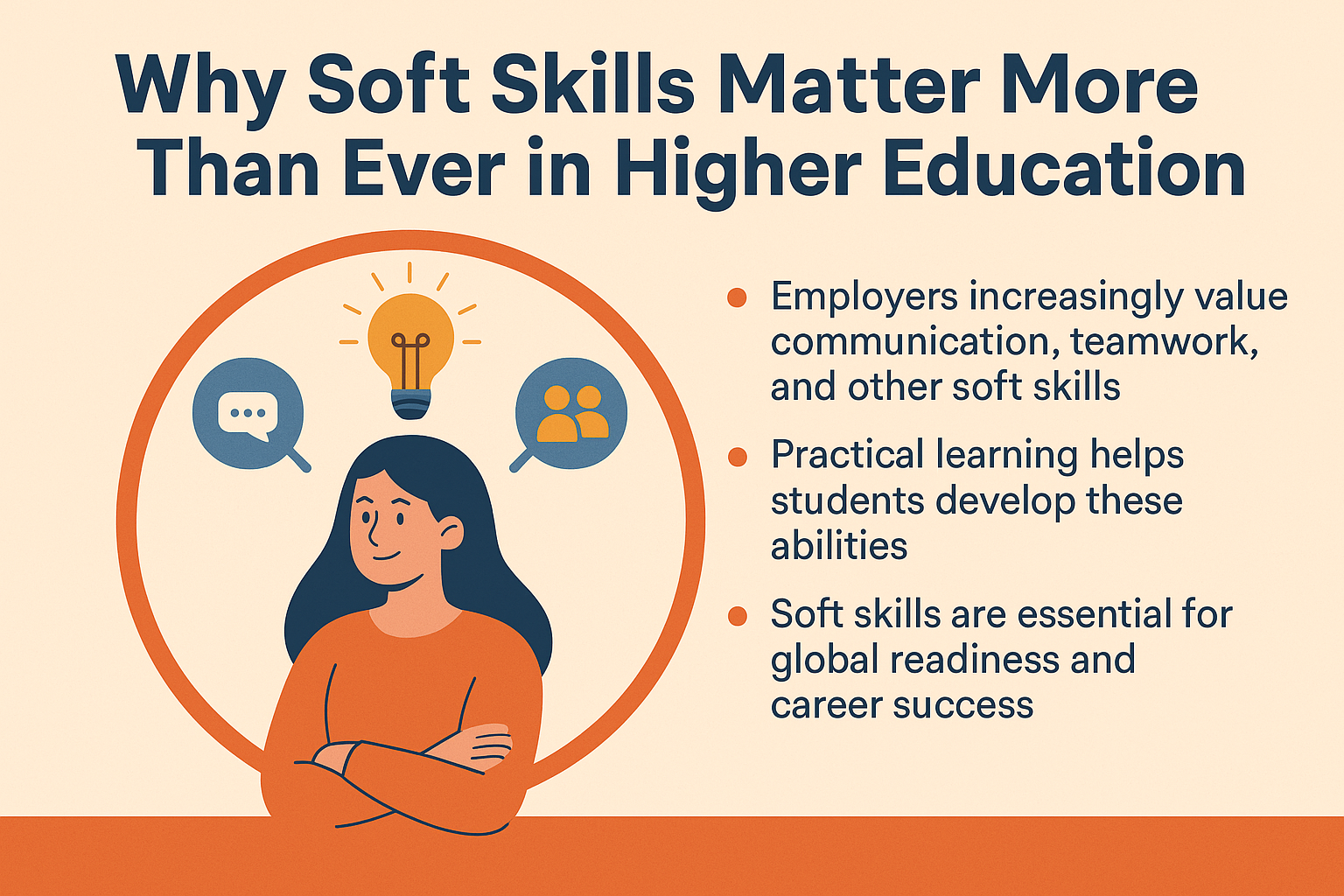
Why Soft Skills Matter More Than Ever
December 01, 2025