Resume Mistakes You Must Avoid in 2025
Your resume is your first impression—and in today’s competitive job market, even small mistakes can cost you big opportunities. Recruiters spend only 6–8 seconds scanning each resume, and Applicant Tracking Systems (ATS) filter out nearly 75% of applications before a human ever sees them.
To help you stand out and increase your interview chances, here are the resume mistakes you must avoid in 2025.
1. Using the Same Resume for Every Job
One-size-fits-all resumes don’t work anymore.
Why it’s a mistake:
Every job has specific skills, keywords, and responsibilities.
What to do instead:
Tailor your resume to each job description
Add relevant keywords from the JD
Highlight the most important experience first
2. Focusing on Responsibilities Instead of Achievements
Recruiters want results, not job descriptions.
Avoid writing:
"Managed a marketing team"
Write this instead:
"Led a 5-member marketing team and increased conversions by 35%”
Numbers make your experience believable and impactful.
3. Poor Formatting & Non-ATS-Friendly Designs
Fancy designs, tables, graphics, and multiple columns confuse ATS software.
Avoid:
Images
Text boxes
Icons
Unusual fonts
Use:
Clean, single-column layout
Standard fonts (Calibri, Arial, Helvetica)
Simple headings and bullet points
4. Making It Too Long
A resume is not your life story.
Ideal length:
1 page for freshers
1–2 pages for experienced professionals
Focus on relevant experience, not every job you've ever done.
5. Lack of Clear Structure
A cluttered resume is difficult to scan quickly.
Make sure your resume has:
A strong headline
A clear summary
Skills section
Experience in bullet points
Education
Certifications (if any)
Order matters.
6. Using Vague or Overused Words
Words like "hardworking," "team player," and "responsible" don’t say anything concrete.
Replace vague terms with:
Achievements
Action verbs
Measurable results
Employers want proof—not buzzwords.
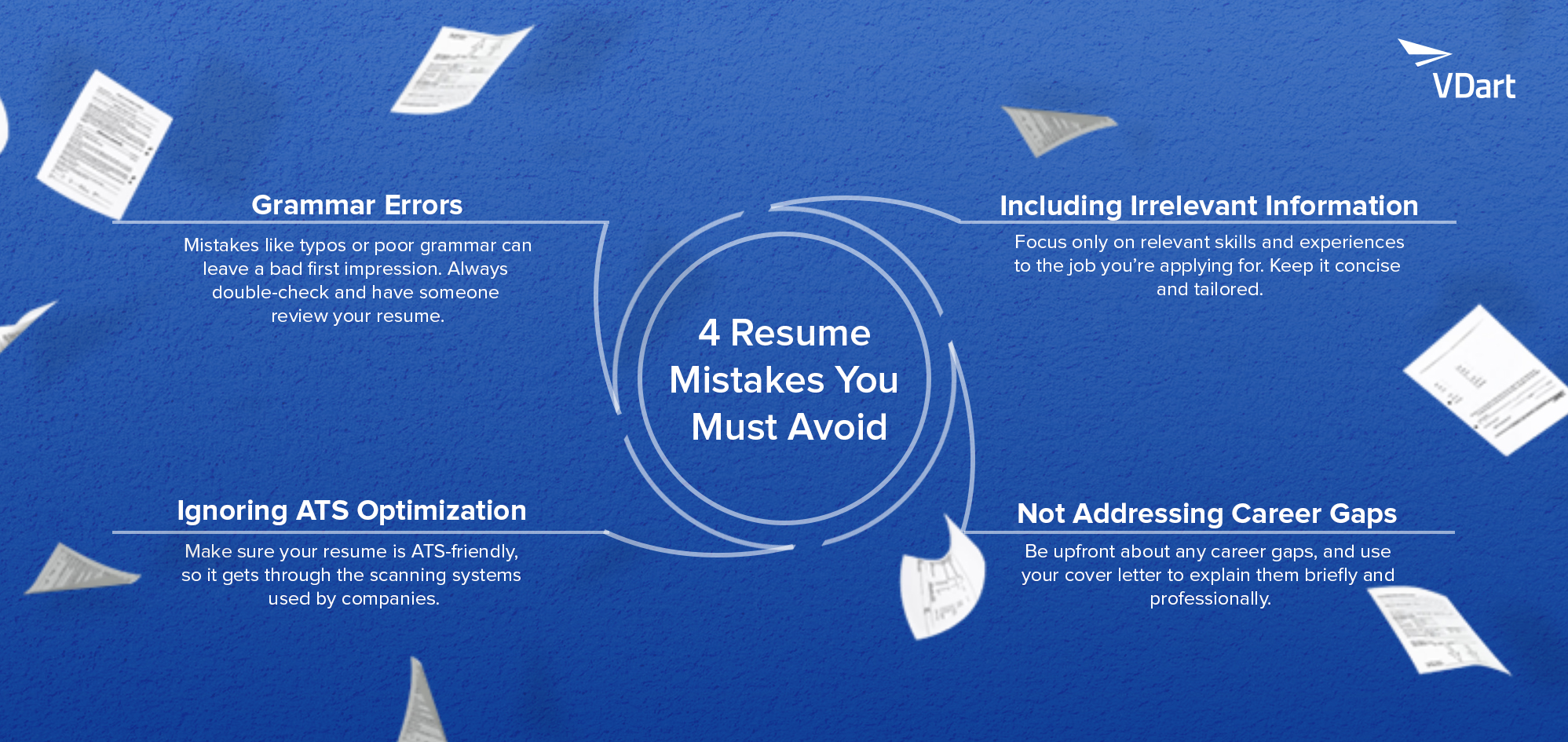
7. Not Including Keywords
ATS systems scan keywords to determine if you’re a match.
Example keywords:
“Digital Marketing,” “SEO,” “Google Ads”
“Python,” “SQL,” “Machine Learning”
“Sales Strategy,” “Lead Generation”
Identify the keywords in the job description and use them naturally.
8. Typos, Grammar Errors, and Inconsistency
Nothing kills credibility faster than mistakes in your resume.
Common errors to avoid:
Typos
Missing periods or inconsistent formatting
Incorrect dates
Misaligned spacing
Always double-check your resume—or ask a friend to proofread it.
9. Including Irrelevant or Outdated Skills
Skip skills like:
MS Paint
Typing speed
Old software
Unrelated hobbies
Focus on skills that hiring managers value in 2025.
10. Leaving Out Links to Your Work
In the digital age, proof matters more than claims.
Include:
LinkedIn profile
Portfolio (for designers, marketers, and developers)
GitHub (for developers)
Personal website
This gives employers more confidence in your abilities.
11. Weak or Missing Professional Summary
Your summary is the first thing recruiters read.
Avoid:
Long paragraphs
Generic sentences
Use:
A 2–3 line powerful summary highlighting:
Your experience
Your key skills
Your impact
Final Thoughts
A great resume doesn’t need to be complicated—it needs to be clear, relevant, and results-driven. By avoiding these common mistakes, you improve your chances of getting noticed and increase your likelihood of landing interviews.
Remember:
Your resume isn’t just a document—it’s your personal marketing tool.
Resume Mistakes You Must Avoid
December 01, 2025